Although movies originally did not have any sound, many silent films were accompanied by a musician or a live band or orchestra, so music and sound were always important in film. The main reason why there was no sound accompanying these films was due to the technical challenges revolving around sound in film.
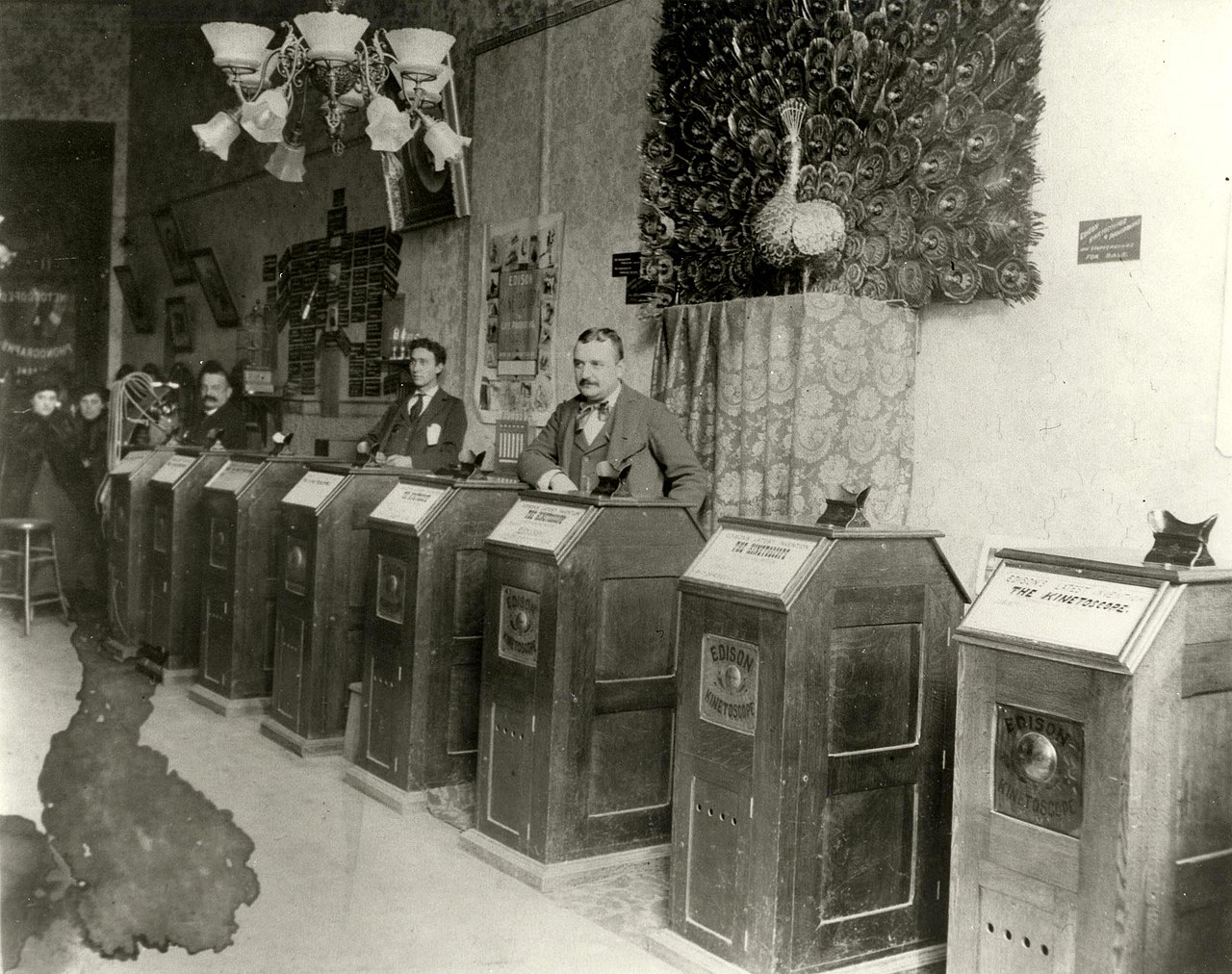
The first attempts to mix sound and film came from Thomas Edison’s Kinetoscope which was a device made for personal viewing that uses pulleys and gears to feed the film strips through a peephole, along with rubber tubes to listen to the accompanying sound. The Kinetoscope also used a wax cylinder to project any sound in the film which would have been synchronized with the film using a belt.
Though, there were problems with the mass use of this technology as many movie theater operators didn’t know how to use them, while also insisting that they had to be the ones to use the Kinetoscope. In turn, due to this lack of knowledge and breaks in the film itself, along with many other things building up, the Kinetoscope never really gained any real traction and Edison abandoned sound motion pictures in 1915, years after he started producing talking films. Since then, there has been a concerted effort to improve sound in film with the eventual addition of soundwaves on film strips and the use of surround sound in the 1940s; which came as TVs began to grow in popularity with movie theaters and Hollywood trying to keep audiences at film screenings.
Nowadays listening to sound in films is a lot easier and complex. By 1977 with the release of “Star Wars” audiences were introduced to Dolby Stereo. With this sound system in theaters, filmmakers were able to experiment more with sound in their films. Later in 1982, with the release of Dolby Surround which allowed for sound engineers to have more control over how sound is heard and how it travels in a space. Then in 2012, the Dolby Atmos was made public and this allowed for audio objects to be placed anywhere in a three-dimensional space. Its thanks to all of these advancements in technology that has allowed movie-goers to have a completely immersive experience which changes the way they experience the film.
Sources:
Fore, Kait. “Dolby Stereo and Surround Sound: The Evolution of Immersive Audio in the Film Industry.” Social Cinema, 28 June 2023, motionpicture.edu/socialcinema/2023/06/28/dolby-stereo-and-surround-sound-immersive-audio-in-film/#:~:text=Dolby%20Surround%20expanded%20on%20the.
Grainger, Ewan. “A Brief History of Sound in Film.” National Science and Media Museum Blog, 13 Sept. 2021, blog.scienceandmediamuseum.org.uk/brief-history-of-sound-in-film/.
Library of Congress. “Early Edison Experiements with Sight and Sound | Articles and Essays | Inventing Entertainment: The Early Motion Pictures and Sound Recordings of the Edison Companies | Digital Collections | Library of Congress.” Library of Congress, Washington, D.C. 20540 USA, www.loc.gov/collections/edison-company-motion-pictures-and-sound-recordings/articles-and-essays/early-edison-experiments-with-sight-and-sound/#:~:text=The%20viewer%20would%20look%20into.
Matwichuk, Meghann. “Research Guides: Film Finders: Exploring Special Topics: Silent Films.” Guides.lib.udel.edu, guides.lib.udel.edu/filmfinders_topics/Silent_Film.